Biopolymer Hydrogels, Biochar, and Bio-based Plastics: A Review
الكلمات المفتاحية:
Biopolymer hydrogels، Biochar، Bio-based plastics، Sustainable materials، Agricultural waste valorizationالملخص
Growing environmental concerns regarding traditional petroleum-derived materials have led to increased research interest in sustainable alternatives derived from renewable resources. This review provides a comprehensive overview of three main types of biomaterials: biopolymer hydrogels, biochar, and bioplastics. Despite their different compositions and manufacturing methods, biopolymer hydrogels, biochar, and bioplastics share a common goal: producing sustainable, practical, and environmentally compatible materials. Key challenges remain, including improving mechanical performance, ensuring scalability, and achieving long-term stability. By addressing these limitations through integrated design strategies, these biomaterials hold great promise for advancing the circular bioeconomy and reducing the environmental impact of material consumption across various industries.
التنزيلات
المراجع
[1] M. Lackner and M. Besharati, “Agricultural Waste: Challenges and Solutions, a Review,” Waste, vol. 3, no. 2, p. 18, Jun. 2025, doi: 10.3390/waste3020018.
[2] S. A. Razzak et al., “Biomass-derived carbon materials as sustainable platforms for advanced biomedical applications,” Environmental Surfaces and Interfaces, vol. 4, pp. 45–70, Dec. 2026, doi: 10.1016/j.esi.2025.12.004.
[3] F. Kamran, H. Afshar, and F. Shahi, “Recent Advances and Applications of Sustainable and Recyclable Polymers,” Polym. Eng. Sci., vol. 65, no. 8, pp. 3845–3879, Aug. 2025, doi: 10.1002/pen.27257.
[4] B. P. Almeida et al., “Agricultural Biomass as a Resource for Biomaterials, Biofertilizers, and Bioproducts: A Systematic Review,” Agrochemicals, vol. 4, no. 4, p. 23, Dec. 2025, doi: 10.3390/agrochemicals4040023.
[5] A. Mahmood, D. Patel, B. Hickson, J. DesRochers, and X. Hu, “Recent Progress in Biopolymer-Based Hydrogel Materials for Biomedical Applications,” Int. J. Mol. Sci., vol. 23, no. 3, p. 1415, Jan. 2022, doi: 10.3390/ijms23031415.
[6] M. Melikoglu, “Advancements in biopolymer production: A review of sustainable approaches and applications,” Next Materials, vol. 10, p. 101513, Jan. 2026, doi: 10.1016/j.nxmate.2025.101513.
[7] M. Afshar and S. Mofatteh, “Biochar for a sustainable future: Environmentally friendly production and diverse applications,” Results in Engineering, vol. 23, p. 102433, Sep. 2024, doi: 10.1016/j.rineng.2024.102433.
[8] S. Huang, Q. Dong, S. Che, R. Li, and K. H. D. Tang, “Bioplastics and biodegradable plastics: A review of recent advances, feasibility and cleaner production,” Science of The Total Environment, vol. 969, p. 178911, Mar. 2025, doi: 10.1016/j.scitotenv.2025.178911.
[9] M. Santhamoorthy et al., “Amidoxime functionalized mesoporous silica nanoparticles for pH-responsive delivery of anticancer drug,” Zeitschrift für Physikalische Chemie, vol. 238, no. 11, pp. 2135–2146, Nov. 2024, doi: 10.1515/zpch-2023-0488.
[10] K. Thirupathi et al., “Thermosensitive Polymer-Modified Mesoporous Silica for pH and Temperature-Responsive Drug Delivery,” Pharmaceutics, vol. 15, no. 3, p. 795, Feb. 2023, doi: 10.3390/pharmaceutics15030795.
[11] K. M. Blevins, R. M. Danilkowicz, A. N. Fletcher, N. B. Allen, L. G. Johnson, and S. B. Adams, “In Situ 3D Bioprinting of Musculoskeletal Tissues in Orthopedic Surgery,” J. 3D Print. Med., vol. 6, no. 1, pp. 25–36, Mar. 2022, doi: 10.2217/3dp-2021-0022.
[12] A. Basanth, N. Mayilswamy, and B. Kandasubramanian, “Bone regeneration by biodegradable polymers,” Polymer-Plastics Technology and Materials, vol. 61, no. 8, pp. 816–845, May 2022, doi: 10.1080/25740881.2022.2029886.
[13] M. Santhamoorthy et al., “Preparation of Magnetic Iron Oxide Incorporated Mesoporous Silica Hybrid Composites for pH and Temperature-Sensitive Drug Delivery,” Magnetochemistry, vol. 9, no. 3, p. 81, Mar. 2023, doi: 10.3390/magnetochemistry9030081.
[14] P. Wang, Z. Luo, and Z. Xiao, “Preparation, physicochemical characterization and in vitro release behavior of resveratrol-loaded oxidized gellan gum/resistant starch hydrogel beads,” Carbohydr. Polym., vol. 260, p. 117794, May 2021, doi: 10.1016/j.carbpol.2021.117794.
[15] L. Liu, W. Yao, X. Xie, J. Gao, and X. Lu, “pH-sensitive dual drug loaded janus nanoparticles by oral delivery for multimodal analgesia,” J. Nanobiotechnology, vol. 19, no. 1, p. 235, Dec. 2021, doi: 10.1186/s12951-021-00974-6.
[16] A. Mohan, M. Santhamoorthy, T. T. V. Phan, and S.-C. Kim, “pNIPAm-Based pH and Thermoresponsive Copolymer Hydrogel for Hydrophobic and Hydrophilic Drug Delivery,” Gels, vol. 10, no. 3, p. 184, Mar. 2024, doi: 10.3390/gels10030184.
[17] J. H. Ryu, Y. Lee, W. H. Kong, T. G. Kim, T. G. Park, and H. Lee, “Catechol-Functionalized Chitosan/Pluronic Hydrogels for Tissue Adhesives and Hemostatic Materials,” Biomacromolecules, vol. 12, no. 7, pp. 2653–2659, Jul. 2011, doi: 10.1021/bm200464x.
[18] X. Pan et al., “Preparation, characterisation and comparison of glabridin-loaded hydrogel-forming microneedles by chemical and physical cross-linking,” Int. J. Pharm., vol. 617, p. 121612, Apr. 2022, doi: 10.1016/j.ijpharm.2022.121612.
[19] S. S. Sana et al., “Recent advances on MXene-based hydrogels for antibacterial and drug delivery applications,” Process Biochemistry, vol. 132, pp. 200–220, Sep. 2023, doi: 10.1016/j.procbio.2023.06.022.
[20] H. Zhang, X. Sun, M. Hubbe, and L. Pal, “Flexible and Pressure-Responsive Sensors from Cellulose Fibers Coated with Multiwalled Carbon Nanotubes,” ACS Appl. Electron. Mater., vol. 1, no. 7, pp. 1179–1188, Jul. 2019, doi: 10.1021/acsaelm.9b00182.
[21] M. Santhamoorthy et al., “L-lysine Functionalized Mesoporous Silica Hybrid Nanoparticles for pH-Responsive Delivery of Curcumin,” Pharmaceutics, vol. 15, no. 6, p. 1631, May 2023, doi: 10.3390/pharmaceutics15061631.
[22] T. T. V. Phan and M. Santhamoorthy, “Preparation of Dual pH- and Temperature-Sensitive Nanogels for Curcumin Delivery,” in IOCN 2023, Basel Switzerland: MDPI, May 2023, p. 71. doi: 10.3390/IOCN2023-14468.
[23] E. Barrett-Catton, M. L. Ross, and P. Asuri, “Multifunctional Hydrogel Nanocomposites for Biomedical Applications,” Polymers (Basel)., vol. 13, no. 6, p. 856, Mar. 2021, doi: 10.3390/polym13060856.
[24] M. Santhamoorthy et al., “L-Lysine-Modified pNIPAm-co-GMA Copolymer Hydrogel for pH- and Temperature-Responsive Drug Delivery and Fluorescence Imaging Applications,” Gels, vol. 9, no. 5, p. 363, Apr. 2023, doi: 10.3390/gels9050363.
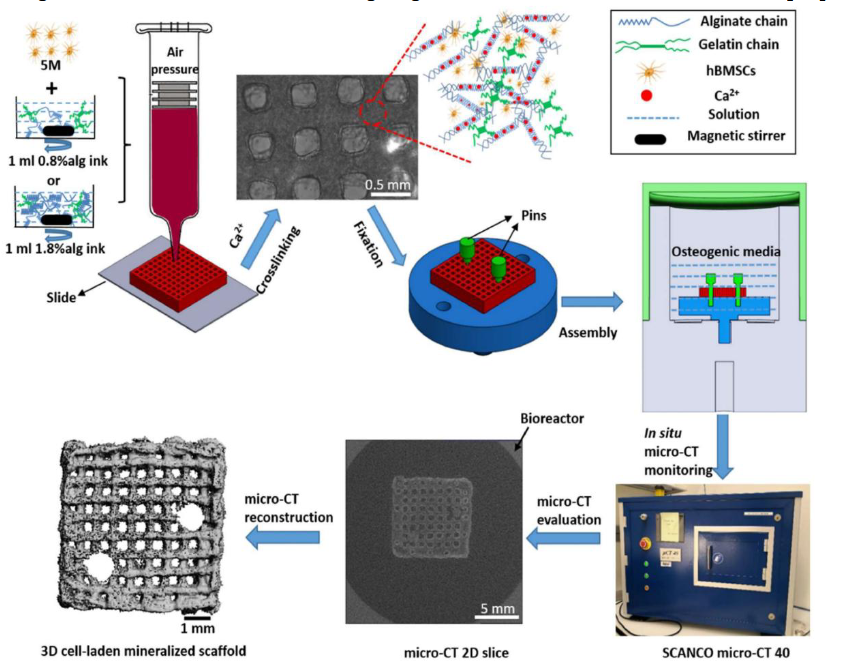
[25] J. Zhang et al., “Optimization of mechanical stiffness and cell density of 3D bioprinted cell-laden scaffolds improves extracellular matrix mineralization and cellular organization for bone tissue engineering,” Acta Biomater., vol. 114, pp. 307–322, Sep. 2020, doi: 10.1016/j.actbio.2020.07.016.
[26] S. Lee, H. S. Kim, and H. S. Yoo, “Electrospun nanofibrils embedded hydrogel composites for cell cultivation in a biomimetic environment,” RSC Adv., vol. 7, no. 85, pp. 54246–54253, 2017, doi: 10.1039/C7RA08595H.
[27] X. Wei, Y. Luo, and P. Huang, “3D bioprinting of alginate scaffolds with controlled micropores by leaching of recrystallized salts,” Polymer Bulletin, vol. 76, no. 12, pp. 6077–6088, Dec. 2019, doi: 10.1007/s00289-019-02690-6.
[28] J. Zhang et al., “Optimization of mechanical stiffness and cell density of 3D bioprinted cell-laden scaffolds improves extracellular matrix mineralization and cellular organization for bone tissue engineering,” Acta Biomater., vol. 114, pp. 307–322, Sep. 2020, doi: 10.1016/j.actbio.2020.07.016.
[29] O. Yom-Tov, D. Seliktar, and H. Bianco-Peled, “PEG-Thiol based hydrogels with controllable properties,” Eur. Polym. J., vol. 74, pp. 1–12, Jan. 2016, doi: 10.1016/j.eurpolymj.2015.11.002.
[30] M. S. Moorthy, P. K. Tapaswi, S. S. Park, A. Mathew, H.-J. Cho, and C.-S. Ha, “Ion-imprinted mesoporous silica hybrids for selective recognition of target metal ions,” Microporous and Mesoporous Materials, vol. 180, pp. 162–171, Nov. 2013, doi: 10.1016/j.micromeso.2013.06.010.
[31] M. Santhamoorthy and S.-C. Kim, “Dual pH- and Thermo-Sensitive Poly(N-isopropylacrylamide-co-allylamine) Nanogels for Curcumin Delivery: Swelling–Deswelling Behavior and Phase Transition Mechanism,” Gels, vol. 9, no. 7, p. 536, Jul. 2023, doi: 10.3390/gels9070536.
[32] R. Wang et al., “Dynamic Crosslinked Injectable Mussel-Inspired Hydrogels with Adhesive, Self-Healing, and Biodegradation Properties,” Polymers (Basel)., vol. 15, no. 8, p. 1876, Apr. 2023, doi: 10.3390/polym15081876.
[33] H. Pan et al., “Fully Biobased High-Strength and High-Toughness Double Cross-Linked Cellulose Hydrogel for Flexible Electrolytes,” ACS Sustain. Chem. Eng., vol. 12, no. 50, pp. 18231–18244, Dec. 2024, doi: 10.1021/acssuschemeng.4c07758.
[34] Z. Tariq, D. N. Iqbal, M. Rizwan, M. Ahmad, M. Faheem, and M. Ahmed, “Significance of biopolymer-based hydrogels and their applications in agriculture: a review in perspective of synthesis and their degree of swelling for water holding,” RSC Adv., vol. 13, no. 35, pp. 24731–24754, 2023, doi: 10.1039/D3RA03472K.
[35] Y. Guo, J. Bae, F. Zhao, and G. Yu, “Functional hydrogels for next-generation batteries and supercapacitors,” Trends Chem., vol. 1, no. 3, pp. 335–348, 2019.
[36] C. Lu and X. Chen, “All-temperature flexible supercapacitors enabled by antifreezing and thermally stable hydrogel electrolyte,” Nano Lett., vol. 20, no. 3, pp. 1907–1914, 2020.
[37] F. Zou and A. Manthiram, “A review of the design of advanced binders for high‐performance batteries,” Adv. Energy Mater., vol. 10, no. 45, p. 2002508, 2020.
[38] W.-J. Kim, J. G. Kang, and D.-W. Kim, “Fibrin biopolymer hydrogel-templated 3D interconnected Si@ C framework for lithium ion battery anodes,” Appl. Surf. Sci., vol. 551, p. 149439, 2021.
[39] C. Chen, S. H. Lee, M. Cho, J. Kim, and Y. Lee, “Cross-linked chitosan as an efficient binder for Si anode of Li-ion batteries,” ACS Appl. Mater. Interfaces, vol. 8, no. 4, pp. 2658–2665, 2016.
[40] X. Liu et al., “Rational design of stretchable and conductive hydrogel binder for highly reversible SiP2 anode,” Journal of Energy Chemistry, vol. 83, pp. 564–573, 2023.
[41] W. Wang et al., “Novel-designed cobweb-like binder by ‘four-in-one’ strategy for high performance SiO anode,” Chemical Engineering Journal, vol. 458, p. 141387, 2023.
[42] J. Liu, C. Yang, X. Chi, B. Wen, W. Wang, and Y. Liu, “Water/sulfolane hybrid electrolyte achieves ultralow‐temperature operation for high‐voltage aqueous lithium‐ion batteries,” Adv. Funct. Mater., vol. 32, no. 1, p. 2106811, 2022.
[43] L. Ma et al., “Super‐stretchable zinc–air batteries based on an alkaline‐tolerant dual‐network hydrogel electrolyte,” Adv. Energy Mater., vol. 9, no. 12, p. 1803046, 2019.
[44] J. Wang et al., “Ultrasoft all-hydrogel aqueous lithium-ion battery with a coaxial fiber structure,” Polym. J., vol. 54, no. 11, pp. 1383–1389, 2022.
[45] Z. Pei et al., “A flexible rechargeable zinc–air battery with excellent low‐temperature adaptability,” Angew. Chem. Int. Ed., vol. 59, no. 12, pp. 4793–4799, 2020.
[46] M. Zhu et al., “Antifreezing hydrogel with high zinc reversibility for flexible and durable aqueous batteries by cooperative hydrated cations,” Adv. Funct. Mater., vol. 30, no. 6, p. 1907218, 2020.
[47] J. Bae et al., “A 3D nanostructured hydrogel‐framework‐derived high‐performance composite polymer lithium‐ion electrolyte,” Angew. Chem. Int. Ed., vol. 57, no. 8, pp. 2096–2100, 2018.
[48] X. Cao et al., “High-performance fully-stretchable solid-state lithium-ion battery with a nanowire-network configuration and crosslinked hydrogel,” J. Mater. Chem. A Mater., vol. 10, no. 21, pp. 11562–11573, 2022.
[49] A. Herrmann, R. Haag, and U. Schedler, “Hydrogels and their role in biosensing applications,” Adv. Healthc. Mater., vol. 10, no. 11, p. 2100062, 2021.
[50] Z. Shen, J. Huang, Y. Xie, D. Wei, J. Chen, and Z. Shi, “Solid electrolyte interphase on lithium metal anodes,” ChemSusChem, vol. 17, no. 11, p. e202301777, 2024.
[51] M. Zhao, B.-Q. Li, X.-Q. Zhang, J.-Q. Huang, and Q. Zhang, “A perspective toward practical lithium–sulfur batteries,” ACS Cent. Sci., vol. 6, no. 7, pp. 1095–1104, 2020.
[52] F. Zou and A. Manthiram, “A review of the design of advanced binders for high‐performance batteries,” Adv. Energy Mater., vol. 10, no. 45, p. 2002508, 2020.
[53] A. S. Kulathuvayal and Y. Su, “Ionic transport through the solid electrolyte interphase in lithium-ion batteries: A review from first-principles perspectives,” ACS Appl. Energy Mater., vol. 6, no. 11, pp. 5628–5645, 2023.
[54] A. A. Boateng, M. Garcia-Perez, O. Mašek, R. Brown, and B. del Campo, “Biochar production technology,” in Biochar for environmental management, Routledge, 2015, pp. 63–87.
[55] J. Wang and S. Wang, “Preparation, modification and environmental application of biochar: A review,” J. Clean. Prod., vol. 227, pp. 1002–1022, 2019.
[56] J. S. Cha et al., “Production and utilization of biochar: A review,” Journal of Industrial and Engineering Chemistry, vol. 40, pp. 1–15, 2016.
[57] B. Sajjadi, W.-Y. Chen, and N. O. Egiebor, “A comprehensive review on physical activation of biochar for energy and environmental applications,” Reviews in Chemical Engineering, vol. 35, no. 6, pp. 735–776, 2019.
[58] A. K. Sakhiya, A. Anand, and P. Kaushal, “Production, activation, and applications of biochar in recent times,” Biochar, vol. 2, no. 3, pp. 253–285, 2020.
[59] K. H. Min, K. H. Kim, J.-H. Seo, and S. P. Pack, “Biochar utilization in antimicrobial, anticancer, and biosensing applications: a review,” Biomolecules, vol. 15, no. 6, p. 760, 2025.
[60] J. L. Gomez-Eyles, T. Sizmur, C. D. Collins, and M. E. Hodson, “Effects of biochar and the earthworm Eisenia fetida on the bioavailability of polycyclic aromatic hydrocarbons and potentially toxic elements,” Environmental pollution, vol. 159, no. 2, pp. 616–622, 2011.
[61] Z. Tan, Y. Wang, L. Zhang, and Q. Huang, “Study of the mechanism of remediation of Cd-contaminated soil by novel biochars,” Environmental Science and Pollution Research, vol. 24, no. 32, pp. 24844–24855, 2017.
[62] M. Ahmad et al., “Effects of pyrolysis temperature on soybean stover-and peanut shell-derived biochar properties and TCE adsorption in water,” Bioresour. Technol., vol. 118, pp. 536–544, 2012.
[63] V. Siracusa and I. Blanco, “Bio-Polyethylene (Bio-PE), Bio-Polypropylene (Bio-PP) and Bio-Poly(ethylene terephthalate) (Bio-PET): Recent Developments in Bio-Based Polymers Analogous to Petroleum-Derived Ones for Packaging and Engineering Applications,” Polymers (Basel)., vol. 12, no. 8, p. 1641, Jul. 2020, doi: 10.3390/polym12081641.
[64] D. C. Rodrigues, A. P. Cunha, E. S. Brito, H. M. C. Azeredo, and M. I. Gallão, “Mesquite seed gum and palm fruit oil emulsion edible films: Influence of oil content and sonication,” Food Hydrocoll., vol. 56, pp. 227–235, May 2016, doi: 10.1016/j.foodhyd.2015.12.018.
[65] X. Yang, M. Guo, X. Wang, W. Huan, and M. Li, “Biobased Epoxies Derived from Myrcene and Plant Oil: Design and Properties of Their Cured Products,” ACS Omega, vol. 5, no. 45, pp. 28918–28928, Nov. 2020, doi: 10.1021/acsomega.0c02166.
[66] M. M. Abe et al., “Advantages and Disadvantages of Bioplastics Production from Starch and Lignocellulosic Components,” Polymers (Basel)., vol. 13, no. 15, p. 2484, Jul. 2021, doi: 10.3390/polym13152484.
[67] M. Liu, S. Tong, Z. Tong, Y. Guan, and Y. Sun, “A strong, biodegradable and transparent cellulose‐based bioplastic stemmed from waste paper,” J. Appl. Polym. Sci., vol. 140, no. 13, Apr. 2023, doi: 10.1002/app.53671.
[68] M. M. Abe et al., “Advantages and Disadvantages of Bioplastics Production from Starch and Lignocellulosic Components,” Polymers (Basel)., vol. 13, no. 15, p. 2484, Jul. 2021, doi: 10.3390/polym13152484.
[69] M. S. da F. Diniz, M. M. Mourão, L. P. Xavier, and A. V. Santos, “Recent Biotechnological Applications of Polyhydroxyalkanoates (PHA) in the Biomedical Sector—A Review,” Polymers (Basel)., vol. 15, no. 22, p. 4405, Nov. 2023, doi: 10.3390/polym15224405.
[70] J. E. Weinstein, J. L. Dekle, R. R. Leads, and R. A. Hunter, “Degradation of bio-based and biodegradable plastics in a salt marsh habitat: Another potential source of microplastics in coastal waters,” Mar. Pollut. Bull., vol. 160, p. 111518, Nov. 2020, doi: 10.1016/j.marpolbul.2020.111518.
[71] M. Koller and A. Mukherjee, “Polyhydroxyalkanoate (PHA) Bio-polyesters – Circular Materials for Sustainable Development and Growth,” Chem. Biochem. Eng. Q., no. 4, Feb. 2023, doi: 10.15255/CABEQ.2022.2124.
[72] C. M. Mendieta, G. González, M. E. Vallejos, and M. C. Area, “Bio-polyethylene furanoate (Bio-PEF) from lignocellulosic biomass adapted to the circular bioeconomy,” Bioresources, vol. 17, no. 4, pp. 7313–7337, Oct. 2022, doi: 10.15376/biores.17.4.Mendieta.
[73] K. Loos et al., “A Perspective on PEF Synthesis, Properties, and End-Life,” Front. Chem., vol. 8, Jul. 2020, doi: 10.3389/fchem.2020.00585.
[74] T. Shevtsova et al., “Enhancing Plant Protein-Based Bioplastics with Natural Additives: A Comprehensive Study by Experimental and Computational Approaches,” ACS Sustain. Chem. Eng., vol. 12, no. 43, pp. 15948–15960, Oct. 2024, doi: 10.1021/acssuschemeng.4c03971.
[75] Q. Ye, Y. Han, J. Zhang, W. Zhang, C. Xia, and J. Li, “Bio-based films with improved water resistance derived from soy protein isolate and stearic acid via bioconjugation,” J. Clean. Prod., vol. 214, pp. 125–131, Mar. 2019, doi: 10.1016/j.jclepro.2018.12.277.
[76] G. Bishop, D. Styles, and P. N. L. Lens, “Environmental performance of bioplastic packaging on fresh food produce: A consequential life cycle assessment,” J. Clean. Prod., vol. 317, p. 128377, Oct. 2021, doi: 10.1016/j.jclepro.2021.128377.
[77] S. Kakadellis and Z. M. Harris, “Don’t scrap the waste: The need for broader system boundaries in bioplastic food packaging life-cycle assessment – A critical review,” J. Clean. Prod., vol. 274, p. 122831, Nov. 2020, doi: 10.1016/j.jclepro.2020.122831.
[78] V. Upadhayay, S. Verma, and A. Kuila, “Production of poly hydroxy butyrate (PHB) from Eichhornia crassipes through microbial fermentation process,” Plant Science Today, vol. 6, no. sp1, pp. 541–550, Dec. 2019, doi: 10.14719/pst.2019.6.sp1.673.
[79] M. He et al., “Biocompatible and Biodegradable Bioplastics Constructed from Chitin via a ‘Green’ Pathway for Bone Repair,” ACS Sustain. Chem. Eng., vol. 5, no. 10, pp. 9126–9135, Oct. 2017, doi: 10.1021/acssuschemeng.7b02051.
[80] S. Buonvino, M. Ciocci, F. Nanni, I. Cacciotti, and S. Melino, “New vegetable-waste biomaterials by Lupin albus L. as cellular scaffolds for applications in biomedicine and food,” Biomaterials, vol. 293, p. 121984, Feb. 2023, doi: 10.1016/j.biomaterials.2022.121984.
[81] S. Mehariya et al., “Microalgae: A potential bioagent for treatment of emerging contaminants from domestic wastewater,” Chemosphere, vol. 351, p. 141245, Mar. 2024, doi: 10.1016/j.chemosphere.2024.141245.
[82] G. Pathinettampadian, M. Vellaisamy, T. Kumar Muthu Kumar, M. Agnelo Browne, and M. Kumar Subramaniyan, “Some studies on functional behavior of novel multi-layered material for integrated structural application,” Journal of Industrial and Engineering Chemistry, vol. 131, pp. 545–557, Mar. 2024, doi: 10.1016/j.jiec.2023.10.059.
[83] M. Norkhairunnisa, T. Chai Hua, F. Bajuri, I. N. Yaacob, and K. A. Ahmad, “Sustainable Biocomposite‐Based Biomass for Aerospace Applications,” Plant Biomass Derived Materials: Sources, Extractions, and Applications, pp. 517–535, 2024.
[84] O. Olatunji, “Plastics and space exploration,” Re-envisioning Plastics Role in the Global Society: Perspectives on Food, Urbanization, and Environment, pp. 195–217, 2024.
التنزيلات
منشور
إصدار
القسم
الفئات
الرخصة
الحقوق الفكرية (c) 2026 Boughezala Hamad Omayma, Djouadi Nadia, Leghrieb Ikhlasse, Rebbouh Rodaina, Kired Chaima (Author)

هذا العمل مرخص بموجب Creative Commons Attribution-NonCommercial 4.0 International License.

 Articles in this journal are published under the terms and conditions of the Creative Commons Attribution-NonCommercial 4.0 International License.